


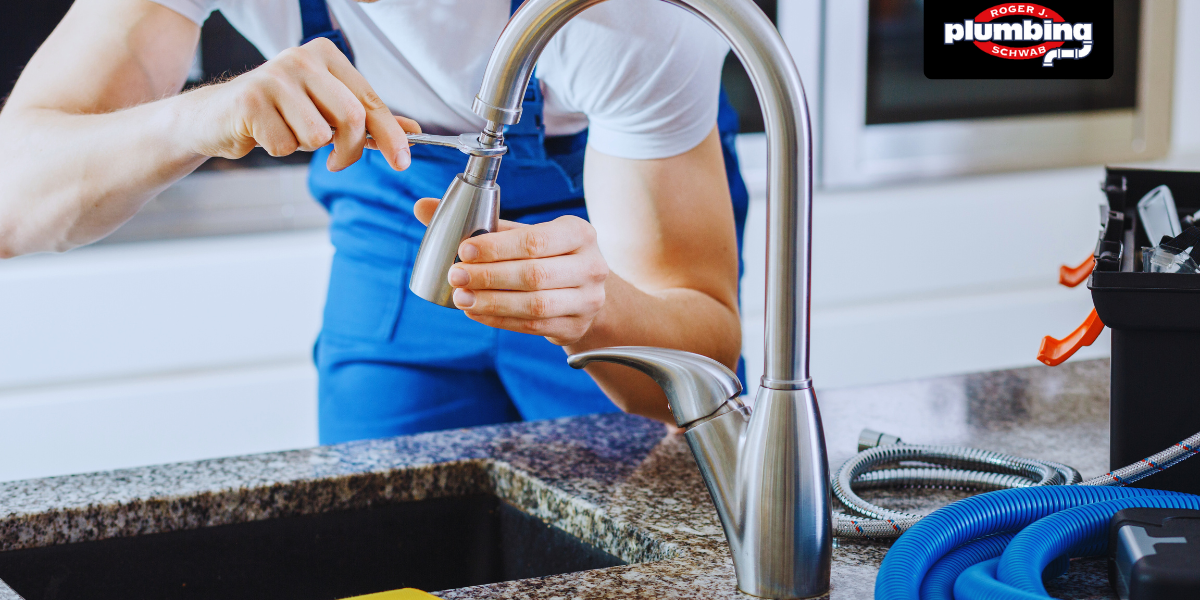
That drip. Drip. Drip.
It’s been going on for three weeks now. You’ve tried tightening everything. You’ve jiggled the handle. You’ve convinced yourself it’s not that bad. But you’re lying awake at 2 AM listening to water hit the sink basin like a metronome from hell.
Or maybe your problem is different. Your bathroom sink is cracked. Your kitchen faucet won’t reach the back of your double sink. Your pedestal sink is an eyesore from 1987. Whatever your sink or faucet issue, you’re tired of working around it.
Roger J. Schwab Plumbing has spent over 20 years helping Lake County homeowners solve exactly these problems. We’ve replaced thousands of sinks and faucets in homes from Waukegan to Grayslake, and we’ve learned something important: most people wait way too long to fix these issues.
This guide walks you through everything you need to know about sink and faucet services. You’ll discover when repair makes sense versus replacement, understand your upgrade options, and learn why professional installation saves you money in the long run. No pressure. Just honest advice from neighbors who’ve been doing this for two decades.
The Hidden Costs of Ignoring Sink and Faucet Problems
Let’s get real about what that dripping faucet actually costs you.
A single dripping faucet wastes up to 3,000 gallons of water annually. That’s roughly $35-50 added to your Lake County water bill every year. Got a leak under your sink? That’s even worse. Hidden leaks damage cabinets, create mold, and ruin flooring before you even notice them.
But money isn’t the only issue. Constant dripping drives you crazy. It disturbs sleep. It creates anxiety. Every time you walk past that sink, you’re reminded of the problem you haven’t fixed yet.
Here’s what matters: small problems become big ones when you ignore them. That minor leak corrodes your cabinet base. That loose faucet damages your countertop. That slow drain creates backups that flood your bathroom.
The homeowners who call us early always spend less than those who wait until they have visible water damage. Always.
Want to know the secret? Address problems when they’re still small. A 150faucetrepairbeatsa2,000 cabinet replacement every single time.
When to Repair vs Replace Your Sinks and Faucets
Not every drip requires a new faucet. But some do.
Simple repairs handle most common issues. Worn washers cause drips. Corroded aerators reduce water pressure. Loose mounting nuts create wobbling. Clogged cartridges affect temperature control. These repairs typically cost $100-200 and extend your fixture’s life for years.
Replacement makes sense in specific situations. When your faucet has multiple problems simultaneously. When replacement parts cost almost as much as a new faucet. When you’re updating your kitchen or bathroom anyway. When your current fixtures are simply outdated and inefficient.
The exception is when you’re dealing with cheap builder-grade fixtures. Those bottom-tier faucets installed in spec homes don’t last. Repairing them often costs more than replacing them with quality fixtures that will actually hold up.
Look, we’re not trying to sell you unnecessary replacements. Roger J. Schwab Plumbing built our reputation on honest recommendations. If your faucet can be repaired affordably, we’ll tell you. If replacement makes more financial sense, we’ll explain why.
Our comprehensive faucets, fixtures, and sinks services include both repair and replacement options. We help you make the right choice for your specific situation and budget.
Understanding Your Sink Replacement Options
Modern sinks offer way more choices than the basic white porcelain models from decades ago. Materials have evolved. Styles have expanded. Installation methods have improved.
Material selection impacts both appearance and durability. Stainless steel sinks resist stains and handle daily abuse in busy kitchens. Porcelain or vitreous china sinks offer classic bathroom elegance. Cast iron sinks provide extreme durability with enamel finishes in multiple colors. Composite granite sinks resist scratches and heat. Copper sinks create stunning focal points with natural antimicrobial properties.
Installation type determines both aesthetics and installation complexity. Drop-in sinks sit on top of the counter with a visible rim. Undermount sinks attach below the counter for seamless cleaning. Vessel sinks sit on top of the vanity like decorative bowls. Farmhouse or apron-front sinks make bold kitchen statements. Wall-mount sinks save space in small bathrooms.
Configuration affects functionality in kitchens especially. Single bowl sinks maximize basin size for large pots and pans. Double bowl sinks separate washing and rinsing tasks. Triple bowl sinks add garbage disposal or prep areas. The right configuration depends entirely on how you actually use your kitchen.
| Sink Type | Best For | Typical Cost Range | Installation Complexity | Maintenance Level |
| Stainless Steel Drop-In | Budget-conscious kitchens | 150−400 | Low | Very Low |
| Undermount Granite Composite | Modern kitchen remodels | 300−700 | Medium | Low |
| Farmhouse/Apron Front | Statement kitchen designs | 400−1,200 | High | Medium |
| Pedestal Sink | Small bathrooms | 200−500 | Medium | Low |
| Vessel Sink | Contemporary bath vanities | 150−600 | Low-Medium | Medium |
| Wall-Mount Sink | ADA compliance, tight spaces | 200−500 | High | Low |
| Copper Specialty | Luxury bath/kitchen focal points | 400−2,000+ | Medium-High | High |
But here’s what really matters: your sink must match your plumbing configuration. Not all sinks work with all drain setups. Professional measurement and assessment prevent costly mistakes.
Faucet Technology Has Changed Everything
Remember when faucets just had hot and cold handles? Those days are gone.
Modern faucet technology offers features your parents never imagined. Touchless sensors activate water flow with wave of your hand. Pull-down sprayers provide extended reach and multiple spray patterns. Temperature memory settings remember your preferred warmth. Magnetic docking keeps sprayer heads securely in place. Water-saving aerators maintain pressure while reducing consumption.
Touchless technology has moved beyond commercial restrooms into residential kitchens and bathrooms. The convenience when your hands are covered in raw chicken or paint makes them worth every penny. They also reduce germ transfer and help teach kids better handwashing habits.
Finish selection impacts both appearance and maintenance. Chrome finishes offer affordability and easy cleaning. Brushed nickel hides water spots better than chrome. Oil-rubbed bronze creates traditional elegance. Matte black makes bold contemporary statements. The finish should coordinate with other bathroom or kitchen hardware.
Handle configuration affects both aesthetics and function. Single-handle faucets control temperature and flow with one motion. Double-handle models offer separate hot and cold control. Touchless models eliminate handles entirely. Wall-mount installations free up counter space while creating striking visual impact.
The homeowners who get the most satisfaction from new faucets choose based on how they actually use their sinks, not just how fixtures look in showrooms. Think about your daily routines before selecting features.
Why Professional Installation Beats DIY Every Time
YouTube makes sink and faucet installation look straightforward. Just disconnect the old and connect the new, right?
Wrong.
Here’s the reality: professional installation addresses issues DIYers don’t even know they exist. We check supply line condition before connecting new fixtures. We verify proper drain slope and venting. We test for leaks under pressure. We ensure mounting stability that prevents future problems.
Sink installation especially demands expertise. Undermount sinks require perfect caulking and support to prevent failure. Farmhouse sinks need cabinet modifications for proper fit. Vessel sinks demand precise drain positioning. Wall-mount sinks require blocking in walls for secure attachment.
Faucet installation involves more than just connecting supply lines. Proper installation requires correct thread sealant application, appropriate tightening without over-torquing, proper aerator installation, and leak testing before finishing.
The difference shows up years later. DIY installations often develop slow leaks that damage cabinets gradually. Professional installations last for decades without problems because every detail is handled correctly the first time.
Our plumbing repairs team has seen countless DIY installations gone wrong. We’ve fixed leaks that destroyed custom cabinets. We’ve replaced faucets that were never properly secured. We’ve repaired drains that were installed incorrectly and caused persistent clogs.
Emergency situations definitely require professional help. A burst supply line under your sink isn’t something to tackle yourself while water sprays everywhere. Our emergency plumbing services handle urgent sink and faucet problems throughout Lake County, often arriving the same day you call.
Special Considerations for Lake County Homes
Lake County homes present unique challenges that affect sink and faucet selection and installation.
Older homes in established neighborhoods often have outdated plumbing configurations. The drain positioning doesn’t match modern sink standards. The supply lines are old galvanized pipes prone to corrosion. The cabinet openings were cut for different sink sizes. These homes require experienced plumbers who can adapt modern fixtures to vintage plumbing.
Water quality issues common near Lake Michigan affect fixture lifespan and performance. Hard water with high mineral content clogs aerators faster. It leaves deposits on copper and bronze finishes. It requires specific fixtures designed to handle our local water characteristics.
The homeowners who get the best results work with plumbers who know Lake County specifically. We understand which fixtures hold up best to our water. We know how to work with the plumbing in older Libertyville homes and newer Grayslake subdivisions.
Climate considerations matter too. Our cold Illinois winters can freeze water lines in exterior walls or unheated spaces. Proper installation accounts for these risks, protecting your investment from freeze damage.
Just like our toilet replacement and repair services, sink and faucet work must account for Lake County’s specific conditions. Cookie-cutter approaches from national chains miss these local factors.
Coordinating Sink and Faucet Services With Larger Projects
Sink and faucet replacement rarely happens in isolation. Most homeowners tackle these updates as part of larger renovation projects.
Kitchen remodels provide perfect timing for sink and faucet upgrades. New countertops require new sink installation anyway. Updated cabinets accommodate different sink sizes. Fresh paint and flooring deserve fixtures that match the new aesthetic.
Bathroom renovations similarly benefit from coordinated fixture replacement. When you’re updating your showers and tubs, matching sink and faucet styles create cohesive design. The plumbing is already exposed, making installation easier and more affordable.
But here’s what matters: coordinate your trades properly. Your plumber needs accurate measurements before your countertop fabricator cuts sinkholes. Your electrician should install any under-cabinet lighting before sink installation. Your tile setter needs to finish backsplashes before faucet installation.
We work with contractors throughout Lake County regularly. We understand construction sequencing. We show up when we’re actually needed, not when it’s convenient for us. This coordination prevents delays and cost overruns.
Our full range of plumbing services includes everything from water heaters to gas line services, allowing us to handle multiple aspects of your renovation simultaneously.
Commercial Sink and Faucet Installation Requires Different Expertise
Commercial installations demand different products, different installation methods, and different maintenance approaches than residential work.
Commercial sinks must withstand constant heavy use. Restaurant kitchens need stainless steel multi-compartment sinks that meet health department requirements. Office buildings require durable bathroom sinks that handle hundreds of users daily. Medical facilities need sinks with specific features for sanitation protocols.
Commercial faucets prioritize durability and water conservation. Touchless sensors reduce maintenance and water waste. Metering faucets shut off automatically to prevent overflows. Pre-rinse sprayers in commercial kitchens need to withstand continuous use.
Code requirements for commercial installations exceed residential standards. ADA compliance mandates specific sink heights and clearances. Backflow prevention becomes critical, just like our backflow prevention services address for commercial properties. Commercial kitchens require grease traps and specific drain configurations.
The property managers and business owners who get the best results choose plumbers with proven commercial experience. We’ve installed sinks and faucets in restaurants, office buildings, medical facilities, and retail spaces throughout Lake County.
Frequently Asked Questions
1- What does bathroom sink replacement service include?
Bathroom sink replacement service includes complete removal of your existing sink and installation of your new fixture. We disconnect and cap the water supply lines, remove the old sink and drain assembly, inspect the plumbing for any issues, prepare the mounting surface, install the new sink with proper sealing, connect new supply lines, install the drain assembly and P-trap, and test everything for leaks.
The service also includes disposal of your old sink and cleanup of the work area. We make sure everything is functioning perfectly before we leave. Most bathroom sink replacements take 2-3 hours depending on the installation type.
For older Lake County homes, we often discover outdated plumbing that needs updating during sink replacement. We’ll let you know about any issues and give you options for addressing them properly.
2- How does touchless faucet installation service work?
Touchless faucet installation service involves installing sensor-activated faucets that turn on and off without physical contact. These faucets use infrared sensors to detect hand motion and activate water flow automatically.
The installation process includes mounting the faucet body, installing the sensor unit (typically near the spout), connecting water supply lines, installing the battery pack or wiring to electrical supply, programming the sensor settings, and testing the activation range and response time.
Most touchless faucets offer manual override options for situations when the sensor isn’t ideal. We program these settings based on your preferences during installation. Battery-powered models typically last 1-2 years before requiring new batteries. Hardwired models eliminate battery concerns entirely.
The convenience makes touchless faucets especially popular in kitchens where messy hands are common. They’re also excellent for teaching children proper handwashing habits and reducing germ transfer in bathrooms.
3- What’s involved in pedestal sink installation and removal?
Pedestal sink installation and removal require more expertise than many homeowners realize. The sink bowl mounts to the wall with hidden brackets, while the pedestal base provides support and hides the plumbing.
Removal involves shutting off the water supply, disconnecting supply lines and the drain, unbolting the sink from wall brackets, and removing both the basin and pedestal. We patch any wall damage and cap plumbing lines if you’re switching to a different sink type.
Installation requires locating wall studs for proper bracket mounting (critical for safety), installing blocking if studs aren’t positioned correctly, mounting the wall bracket securely, setting the pedestal for proper height alignment, mounting the basin, and connecting all plumbing.
The challenge is achieving perfect alignment so the basin sits level while the pedestal provides support without bearing all the weight. Improper installation can result in cracked basins or pedestal bases. We ensure everything is properly supported and securely mounted.
Pedestal sinks are excellent space-savers for small bathrooms but offer no storage. Consider this tradeoff before choosing this style. We can show you alternative space-saving options if storage concerns you.
4- Why choose wall-mount faucet installation?
Wall-mount faucet installation creates a sleek, modern appearance while freeing up counter or sink space. The faucet body mounts directly to the wall rather than the sink or counter, with the spout extending over the basin.
This installation style requires blocking in the wall during construction or renovation, proper placement to ensure the spout reaches the sink properly, concealed supply line installation, and careful waterproofing to prevent wall damage from leaks.
Wall-mount faucets work beautifully with vessel sinks, undermount sinks, and unique basin styles. They make counter or sink cleaning easier since you’re not working around deck-mounted faucets. They also create a custom, high-end look that sets your bathroom or kitchen apart.
The installation is more complex than standard deck-mount faucets and typically costs more due to the additional labor. But the visual impact and functionality often justify the extra investment, especially in bathroom renovations where you want a spa-like atmosphere.
5- What should I know about double bowl sink replacement?
Double bowl sink replacement involves specific considerations beyond single bowl installations. The sink must match your counter cutout dimensions, your drain configuration must accommodate two basins, and your faucet must reach both bowls adequately.
The installation process includes removing the old sink, verifying the new sink fits the existing cutout or modifying the counter as needed, installing both drain assemblies with proper venting, ensuring the divider height works for your largest pots and pans, and testing drainage in both bowls simultaneously.
Double bowl configuration offers flexibility for separating tasks—washing in one bowl while rinsing in the other, or soaking dishes in one side while keeping the other available. But the divider reduces the size of each basin, making it harder to wash large items.
Many Lake County homeowners are actually switching from double to single bowl sinks to accommodate larger cookware. We help you think through how you actually use your kitchen before making this decision. There’s no wrong choice—just the right choice for your specific needs.
6- How does commercial sink installation service differ from residential?
Commercial sink installation service addresses much more stringent requirements than residential work. Commercial sinks must meet health department codes, ADA accessibility standards, specific industry regulations (medical, food service, etc.), and heavy-use durability requirements.
The installation typically involves more complex plumbing configurations, including grease traps for food service, backflow prevention devices, specific venting requirements, and commercial-grade materials throughout.
We work with property managers, restaurant owners, medical facilities, and businesses throughout Lake County. Our commercial installations ensure compliance with all applicable codes while minimizing business disruption. We often work outside normal business hours to avoid interfering with operations.
Commercial sinks require different maintenance schedules than residential fixtures. We can set up preventive maintenance programs to keep everything running smoothly and catch small issues before they become expensive problems.
7- What makes vanity and sink installation more complex?
Vanity and sink installation involves coordinating cabinet installation with plumbing rough-in and finish work. The vanity must be level and securely mounted, the sink must align properly with the vanity cutout, and all plumbing must route through the cabinet correctly.
The process includes positioning and leveling the vanity cabinet, securing it to wall studs, cutting any necessary holes for plumbing, installing the sink (either drop-in or undermount), connecting supply lines through the cabinet, installing the drain assembly and P-trap, and attaching the faucet.
Vanity installations get complicated when they include features like double sinks, offset drain locations, or custom configurations. The plumbing must be positioned precisely to work with the vanity design while maintaining proper function.
We coordinate with your cabinet installer or handle both aspects if you prefer. This ensures the plumbing and cabinetry work together perfectly. Just like our garbage disposal services coordinate with existing cabinetry and plumbing, vanity installations require thoughtful planning.
8- When should I consider drop-in sink replacement?
Drop-in sink replacement makes sense when you want to update your sink without replacing countertops. These sinks sit in a cutout with a rim resting on the counter surface, making them easier to install than undermount models.
The replacement process involves disconnecting plumbing, removing the old sink by cutting any caulk or adhesive, cleaning the counter cutout, positioning the new sink, sealing around the rim to prevent leaks, and reconnecting all plumbing.
Drop-in sinks work with virtually any counter material—laminate, tile, solid surface, or natural stone. The visible rim creates a ledge that can collect debris, but it also means easier installation and replacement. They’re typically the most affordable sink installation option.
Most builder-grade homes include drop-in sinks originally. Replacing them with higher-quality drop-in models improves appearance and function without the expense of new countertops. It’s an economical update that makes a noticeable difference.
9- What’s special about shower faucet installation and repair?
Shower faucet installation and repair involves working with concealed plumbing behind tile or shower walls. Unlike kitchen or bathroom sink faucets, shower faucets have the valve body installed inside the wall with only the trim visible.
Repair work requires accessing the valve body through an access panel or by removing trim components. Common repairs include replacing cartridges, fixing temperature imbalances, repairing leaks, and updating old shower valves to modern pressure-balancing or thermostatic types.
Installation of new shower faucets requires opening the wall, positioning the valve at the correct depth for the finished wall, connecting supply lines, testing for leaks, and installing the trim kit after wall finishing is complete.
Our showers and tubs expertise extends to all aspects of shower plumbing, including pressure balancing requirements mandated by current plumbing codes. We ensure your shower delivers safe, consistent temperature control.
10- Why consider a service for installing copper sinks?
Copper sink installation service focuses on these unique, handcrafted sinks that serve as functional artwork in kitchens and bathrooms. Copper offers natural antimicrobial properties, stunning patina development over time, and exceptional durability.
Installation requires special care because copper is softer than stainless steel or cast iron. The sink must be properly supported to prevent denting or deformation. Certain cleaners and acidic foods can affect the patina, so we educate homeowners on proper care during installation.
Copper sinks work beautifully as vessel sinks, farmhouse sinks, or undermount models. They create focal points in both traditional and contemporary designs. The living finish means the sink’s appearance evolves, developing character and uniqueness.
The investment in copper sinks is significant—typically $400-2,000 depending on size and craftsmanship. But for homeowners who want something truly special, few materials match copper’s warmth and visual impact. We help you select mounting methods that showcase the sink while protecting it from damage.
Your Next Step Toward Better Sinks and Faucets
You’ve learned when repair makes sense and when replacement offers better value. You understand the options available for both sinks and faucets. You’ve seen why professional installation matters for longevity and performance.
Now it’s decision time.
That dripping faucet won’t fix itself. That cracked sink will only get worse. Those outdated fixtures continue dragging down your home’s appearance and value. The good news? You’ve found the right plumber to solve these problems.
Roger J. Schwab Plumbing has spent over 20 years earning Lake County’s trust through honest service and quality workmanship. We’re not a national chain with call centers in other states. We’re your neighbors who live, work, and raise our families right here in Lake County.
Call us at (847) 263-0396 or visit our homepage to schedule your sink or faucet service. We’ll give you a straightforward assessment and clear pricing. No pressure. No hidden fees. Just the quality plumbing service you demand at the prices you deserve.
Whether you need a simple faucet repair or complete sink replacement as part of a major renovation, we’ll treat your home with the same care we’d give our own. Learn more about us and discover why Lake County families have trusted us for over two decades.
Your sink and faucet problems end here.