

You hear thunder rumbling in the distance. Your stomach drops because you know what’s coming next—water pooling across your basement floor, ruining boxes of memories, damaging your furnace, and turning your lowest level into a disaster zone.
It’s exhausting living with this anxiety every time dark clouds roll in. You’ve tried cheap fixes that failed. You’ve mopped up water so many times you’ve lost count. And you’re tired of wondering if this is just how basements work in Lake County or if real solutions actually exist.
Here’s the truth: Lake County’s clay-heavy soil, aging infrastructure, and intense storms create perfect conditions for basement flooding, but proven solutions can protect your home permanently. This guide reveals exactly why your basement floods, which solutions actually work for Lake County conditions, and how to stop living in fear of the next rainstorm.
Why Lake County Basements Flood More Than You’d Think
Lake County isn’t like other parts of Illinois when it comes to basement flooding. The region’s specific geography and soil composition create unique challenges that homeowners in other areas don’t face.
Clay soil dominates throughout Lake County. This dense, heavy soil absorbs water incredibly slowly compared to sandy or loamy soils. When heavy rains hit, water can’t soak into the ground fast enough, so it pools on the surface and finds any path into your basement.
The water table sits higher in many Lake County communities than in surrounding regions. During wet seasons, groundwater naturally rises closer to basement floor levels, creating hydrostatic pressure that forces water through any crack or weak point in your foundation.
Aging infrastructure adds another layer of problems. Many Lake County homes were built 50 to 100 years ago when building codes were less strict and waterproofing technology was primitive. These older homes often lack proper drainage systems entirely.
Storm intensity has increased over recent decades. The same sewer and drainage systems designed for typical rainfall 50 years ago now face storms that dump multiple inches in just hours. Municipal systems get overwhelmed, and basement flooding spikes.
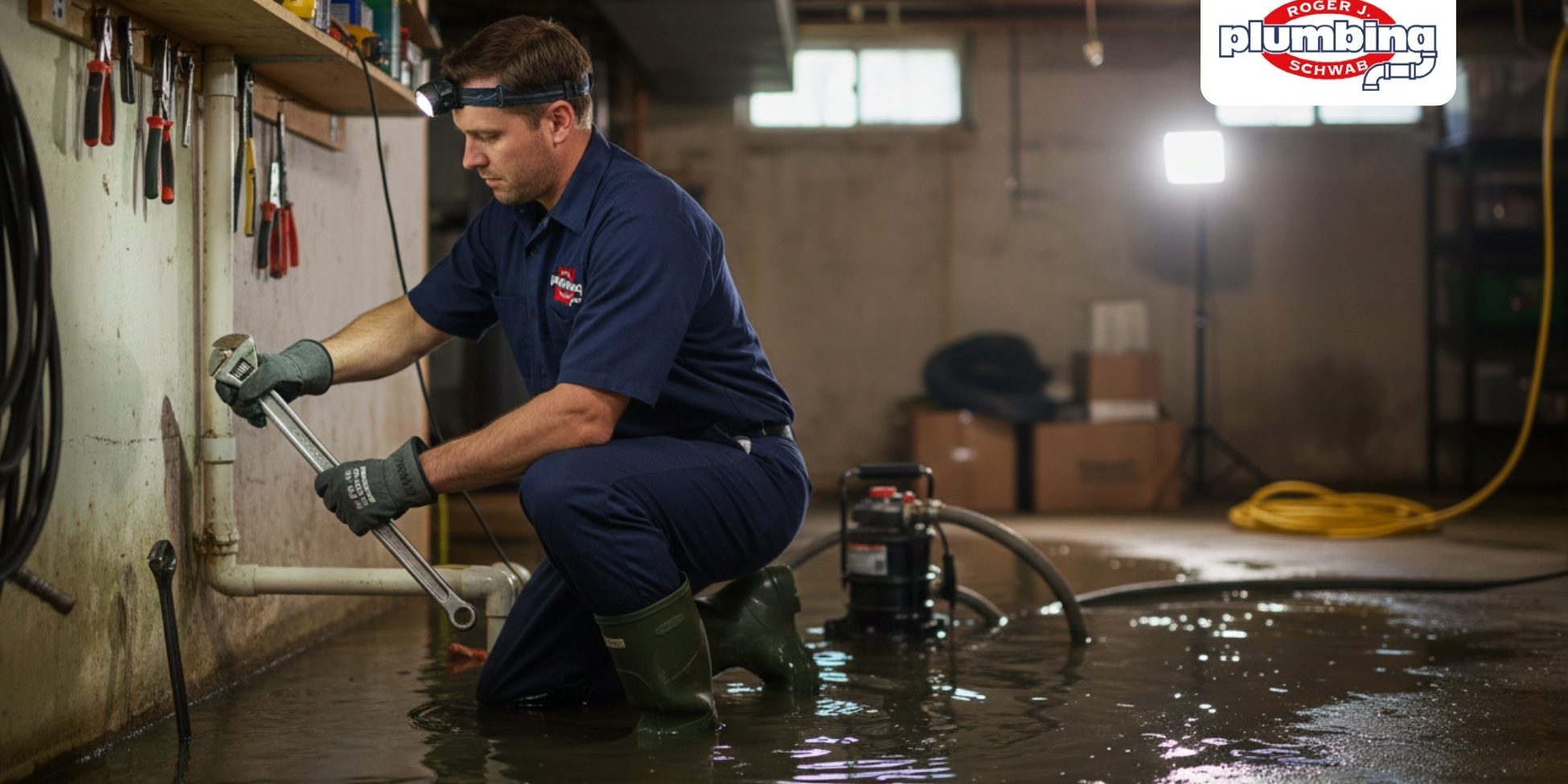
Roger J. Schwab Plumbing has responded to hundreds of Lake County basement flooding emergencies over their 20 years serving the community. They understand these regional challenges intimately because they’ve seen how they affect real homes during real storms.
Topography matters too. Many Lake County properties sit in natural low spots or at the bottom of slopes where water naturally flows during heavy rains. Your basement becomes the collection point for water running off neighboring properties.
Gutters and downspouts that don’t extend far enough from your foundation dump thousands of gallons right next to your basement walls. That water immediately starts looking for ways inside through cracks, window wells, or floor drains.
Here’s the thing: understanding why your specific basement floods is the first step toward implementing solutions that actually work instead of temporary fixes that fail with the next big storm.
The Real Causes Behind Your Recurring Basement Flooding
Most homeowners think basement flooding is random bad luck. It’s not. Specific, fixable problems cause water to enter your basement repeatedly.
Sump pump failures rank as the number one cause of basement flooding in Lake County. Your sump pump sits quietly in the corner doing nothing until storms hit, then suddenly it needs to work perfectly or your basement floods. Pumps fail because they’re old, because discharge lines freeze, or because power outages leave them unable to run during storms.
Foundation cracks allow water to seep or pour through walls and floors. Even hairline cracks can channel significant water during storms with high hydrostatic pressure. Older homes with settling foundations develop these cracks over decades.
Floor drain backups happen when municipal sewer systems get overwhelmed during heavy rains. Water has nowhere to go, so it backs up through your basement floor drain, bringing sewage with it in the worst cases.
Window wells without proper covers or drainage become bathtubs during storms. Water fills the well and eventually finds its way through window seals or cracks in the glass.
Poor grading around your foundation slopes water toward your house instead of away from it. Every rainstorm sends water directly against your basement walls where it probes for entry points.
The exception is catastrophic flooding from burst pipes or water heater failures—these create immediate emergencies requiring different responses than storm-related flooding.
Inadequate drainage systems fail to channel water away before it becomes a problem. Many older Lake County homes lack proper footer drains, french drains, or sufficient downspout extensions.
Callmyplumber.com specializes in diagnosing exactly which combination of factors causes your specific flooding. After two decades of Lake County experience, they recognize patterns that point to root causes rather than just treating symptoms.
Solutions That Actually Protect Lake County Basements
Generic basement waterproofing advice doesn’t account for Lake County’s unique challenges. You need solutions designed specifically for clay soil, high water tables, and intense storms.
Professional sump pump systems form your first line of defense. Not the basic $150 pump from the hardware store, but properly sized pumps with battery backup systems that keep working during power outages. Many Lake County homes benefit from dual pump systems that provide redundancy when one fails.
The battery backup matters more than most homeowners realize. Severe storms that cause the worst flooding often knock out power. Your sump pump becomes useless right when you need it most unless battery backup keeps it running.
Proper discharge line installation ensures pumped water actually leaves your property instead of recycling back to your foundation. Lines must extend at least 10 feet from your home, slope away continuously, and include check valves preventing backflow.
Interior footer drains collect water before it rises to basement floor level. These systems channel water from around your foundation to your sump pit where pumps remove it. Many older homes never had these installed—adding them makes dramatic differences.
Exterior waterproofing tackles problems from outside your foundation. Excavating around your basement, applying waterproof coatings, and installing proper drainage systems stops water before it reaches your walls. This is extensive work but provides comprehensive protection.
Backwater valves prevent sewer backups through floor drains. These mechanical devices allow water to flow out but close automatically when water tries to flow back in during overwhelmed sewer conditions.
Foundation crack repair using modern techniques and materials seals entry points permanently. Professional repairs go beyond surface patching to address cracks structurally.
Here’s what complete basement flood protection typically costs in Lake County:
| Solution | Typical Cost Range | Protection Level | Best For |
|---|---|---|---|
| Basic sump pump replacement | $400-$800 | Moderate | Homes with existing systems |
| Premium sump with battery backup | $1,200-$2,500 | High | Primary protection |
| Interior footer drain system | $3,000-$8,000 | Very High | Persistent seepage |
| Exterior waterproofing | $8,000-$15,000+ | Extremely High | Severe chronic flooding |
| Backwater valve installation | $800-$2,000 | Moderate | Sewer backup prevention |
| Foundation crack repair | $500-$3,000 | Moderate-High | Visible cracks and leaks |
You might feel overwhelmed by these costs. But consider that a single flooding event can cause $10,000 to $50,000 in damage to belongings, structure, and mold remediation. Prevention costs less than repeated cleanup and repairs.
Roger J. Schwab Plumbing helps prioritize which solutions deliver maximum protection for your specific situation and budget. Their experience means they recommend what actually works, not just what’s most profitable to install.
What to Do When Your Basement Is Actively Flooding
Panic is natural when you discover water rising in your basement. But knowing the right steps to take immediately can minimize damage and protect your family.
First, stay safe. Never enter standing water if electrical outlets, appliances, or your electrical panel might be submerged. Water and electricity create deadly combinations. Shut off power to your basement at your main panel if you can do so safely.
Identify the water source if possible. Is it coming through foundation cracks? Backing up from floor drains? Pouring through a window well? Understanding the source helps responders address it quickly.
Call for emergency plumbing help immediately if the flooding involves failed sump pumps, burst pipes, or plumbing-related issues. Don’t wait until morning—water damage worsens every hour.
Move valuable items to higher ground if you can do so safely. Every minute counts for preventing damage to belongings, but your safety comes first.
Document everything with photos and video for insurance claims. Capture water levels, damage to belongings, and the condition of your basement before cleanup begins.
Start water removal as soon as it’s safe. Wet/dry vacuums, pumps, and professional water extraction services all help, but don’t delay—mold begins growing within 24 to 48 hours of water exposure.
The Lake County homeowners who minimize flooding damage are those who act immediately instead of hoping the water will simply go away on its own.
Look, active flooding qualifies as an emergency whether it’s 2 PM Tuesday or 2 AM Sunday. Callmyplumber.com provides 24/7 emergency response because they understand that basement flooding doesn’t wait for convenient business hours.
Preventing the Next Flood Before It Happens
The best time to prevent basement flooding is between storms, not during them. Proactive steps dramatically reduce your flooding risk.
Annual sump pump maintenance catches problems before they cause flooding. Testing operation, cleaning the pit, checking discharge lines, and verifying battery backup functionality all prevent failures during critical moments.
Gutter and downspout maintenance keeps water flowing away from your foundation. Clean gutters regularly, ensure downspouts extend at least 6 feet from your house, and consider adding extensions if water still pools near your foundation.
Foundation inspections identify developing cracks before they become major entry points. Small cracks are cheaper and easier to repair than large ones that have allowed water intrusion for months.
Grading improvements slope soil away from your foundation at minimum 6 inches over 10 feet. This simple fix directs surface water away before it can probe for basement entry points.
Window well covers prevent these vulnerable areas from becoming water collection points. Proper covers keep rain out while still allowing emergency egress from basement bedrooms.
French drain installation channels groundwater away from your foundation before hydrostatic pressure builds. These systems work especially well in Lake County’s clay soil where water doesn’t drain naturally.
Basement waterproofing from the inside provides additional protection layers. Sealants, moisture barriers, and drainage systems work together to keep your basement dry even when water finds its way to your foundation.
The comprehensive plumbing services from callmyplumber.com include basement flood prevention strategies tailored to your home’s specific vulnerabilities. They assess your entire property, not just your basement, to identify where improvements deliver maximum protection.
Their preventive approach saves money compared to repeated emergency calls and damage repairs. After 20 years serving Lake County, they’ve seen which prevention strategies actually work long-term versus temporary fixes that fail quickly.
Frequently Asked Questions
What should I do if my basement is flooding in Lake County Illinois?
If your basement is flooding in Lake County Illinois, immediately ensure everyone’s safety by avoiding standing water near electrical sources and shutting off power to your basement if possible. Next, call emergency plumbing services like callmyplumber.com who provide 24/7 response to flooding emergencies. While waiting for help, try to identify the water source—failed sump pump, foundation cracks, or sewer backup—and document damage with photos for insurance. Start removing water as soon as it’s safe using pumps or wet/dry vacuums. Don’t delay, as water damage worsens hourly and mold begins growing within 24-48 hours. Roger J. Schwab Plumbing has responded to countless Lake County flooding emergencies and understands the urgency these situations demand.
How do I prevent basement flooding during Lake County storms?
Preventing basement flooding during Lake County storms requires multiple protective layers working together. Ensure your sump pump functions properly and includes battery backup for power outages—test it monthly. Extend downspouts at least 6-10 feet from your foundation and keep gutters clean. Install a backwater valve to prevent sewer backups through floor drains. Consider upgrading to premium sump systems with dual pumps for redundancy. Check that grading slopes away from your foundation, and seal any foundation cracks before storm season. Callmyplumber.com specializes in basement flood prevention customized for Lake County’s clay soil and intense storms. Their 20 years of local experience means they know which solutions actually protect against the region’s specific challenges.
What causes my basement to flood every spring in Lake County?
Basements flood every spring in Lake County due to several regional factors working together. Spring brings heavy rains combined with snowmelt, overwhelming drainage systems and raising groundwater levels significantly. Lake County’s clay-heavy soil absorbs water slowly, causing surface pooling that seeks basement entry points. Rising water tables create hydrostatic pressure forcing water through foundation cracks, while aging sump pumps fail after sitting idle all winter. Spring storms can dump multiple inches quickly, exceeding your drainage system’s capacity. Roger J. Schwab Plumbing addresses these recurring spring floods by installing comprehensive drainage solutions, upgrading sump systems, and sealing foundation vulnerabilities before spring arrives. Their preventive approach stops the annual flooding cycle instead of just responding to damage after it occurs.
Can plumbers in Lake County IL help with bathroom remodeling projects?
Yes, plumbers in Lake County IL provide essential services for bathroom remodeling projects. Professional plumbers handle all water supply and drain line relocations, fixture installations, and ensuring work meets Illinois plumbing codes. They install new toilets, showers and tubs, faucets and sinks, and ensure proper drainage and venting. Callmyplumber.com brings 20+ years of Lake County experience to bathroom remodels, understanding both modern fixture requirements and older home plumbing challenges. They coordinate with your contractor or work independently to complete plumbing portions of your renovation correctly and on schedule.
Can a plumber help me plan my bathroom renovation in Lake County IL?
Absolutely. Experienced plumbers like callmyplumber.com provide valuable planning assistance for bathroom renovations in Lake County IL. They assess your existing plumbing to determine what’s feasible within your budget, identify whether your water pressure and drain configurations can support your desired fixtures, and recommend layouts that work with your home’s plumbing infrastructure. They explain which changes require extensive re-piping versus simple fixture swaps, helping you make informed decisions about where to invest your renovation budget. Their familiarity with Lake County’s older homes proves especially valuable—they know which vintage plumbing systems need updating and which can support modern fixtures. This planning prevents costly mid-renovation surprises when contractors discover plumbing limitations.
Stop Living in Fear of the Next Storm
Basement flooding doesn’t have to be your new normal. Lake County’s challenges are real, but proven solutions protect homes permanently when implemented correctly by experienced professionals.
Roger J. Schwab Plumbing has spent over 20 years helping Lake County homeowners reclaim their basements from water damage. They understand regional soil conditions, typical home construction from every era, and which solutions deliver lasting protection versus temporary fixes.
You’ve learned why Lake County basements flood more frequently, which specific factors cause your recurring problems, and what comprehensive protection actually requires. You understand that prevention costs less than repeated damage and that professional solutions work where DIY attempts fail.
Stop wondering if your basement is safe from the next heavy rain. Call callmyplumber.com and schedule a basement flooding assessment. Their team will identify your vulnerabilities, explain which solutions deliver maximum protection for your specific situation, and provide transparent pricing before any work begins.
Check their coverage throughout Lake County’s service areas and read reviews from homeowners who’ve finally solved their basement flooding problems permanently. Learn more about their commitment to protecting Lake County homes.
Whether you need emergency response during active flooding or preventive solutions before the next storm hits, they bring expertise that transforms anxious homeowners into confident ones. Your basement can stay dry through even the worst storms—but only if you implement real solutions instead of hoping the problem goes away.
The next thunderstorm is coming. Will you be ready, or will you be mopping up water again? Make the call that finally ends your basement flooding nightmare.